Domain enarmonisi.de kaufen?
Wir ziehen mit dem Projekt
enarmonisi.de um.
Sind Sie am Kauf der Domain
enarmonisi.de interessiert?
domain@kv-gmbh.de · 0541-91531010
Domain enarmonisi.de kaufen?
Wie kann man verschiedene musikalische Elemente wie Melodie, Rhythmus und Harmonie kombinieren, um eine beeindruckende Komposition zu erstellen?
Man kann verschiedene musikalische Elemente kombinieren, indem man eine Melodie mit einem passenden Rhythmus und harmonischen Akkorden verbindet. Durch die richtige Balance und Abstimmung dieser Elemente entsteht eine harmonische und ansprechende Komposition. Es ist wichtig, kreativ zu sein und experimentierfreudig zu bleiben, um ein einzigartiges und beeindruckendes Musikstück zu schaffen. **
Wie kann man verschiedene musikalische Elemente wie Melodie, Harmonie und Rhythmus zusammenfügen, um eine ansprechende Komposition zu erstellen?
Indem man die Melodie, Harmonie und Rhythmus so kombiniert, dass sie sich gegenseitig ergänzen und verstärken. Durch die Verwendung von Kontrasten und Variationen, um Spannung und Interesse zu erzeugen. Indem man die musikalischen Elemente organisch miteinander verwebt, um eine kohärente und fesselnde Komposition zu schaffen. **
Ähnliche Suchbegriffe für Malekko-PHASE
Top-Angebote
Produkte zum Begriff Malekko-PHASE:
-
Malekko EKKO 616 MKIIMalekko EKKO 616 MKII 650ms analog delay pedal 650ms analog delay pedal Das Malekko EKKO 616 ist ein kompaktes, aber voll ausgestattetes Analog Delay mit einer Verzögerung von bis zu 650 ms. Die spezielle Abstimmung der Repeats des E616 gibt Raum für eine größere Bandbreite als bei den meisten traditionellen Analog Delays. Dreht man das Mix-Poti voll auf, werden die Repeats etwas lauter als das Originalsignal. Das ergibt, wenn benötigt, einiges mehr an Flexibilität. Die Repeats gehen von einem simplen Slapback über ein sanftes Ausklingen bis hin in die nächste Galaxis, wenn man es will. Betätigt man den Modulations-Knopf, bekommt das E616 einen völlig neuen Charakter, von subtilen Chorus über ein wunderschönes Vibrato bis dahin, wohin noch nie ein Mensch vorgestoßen ist. Das EKKO 616 lässt einem sogar noch die Wahl zwischen einem True Bypass und einem gebufferten Bypass, bei dem sich über ein internes Trimpoti die Lautstärke an den Rest des Setups anpassen lässt. Nachdem sie das gemeinsame Musizieren in einer Band ein Jahr überlebt hatten, kam den beiden Inhabern von Malekko die brilliante Idee, auch in der Geschäftswelt zusammenzuarbeiten. Der Umstand, dass sie zu diesem Zeitpunkt nicht im gleichen Bundesstaat lebten, ermöglichte eine unbelastete Produktentwicklung auf und um einen Küchentisch herum. Küchentische im Allgemeinen und der Erfolg des Barker Assmaster im Speziellen riefen aber bald nach einer neuen und angemessenen Werkstatt für das wachsende Geschäft. Mit der neuen Produktionsstätte hielt auch etwas mehr Seriösität Einzug bei Malekko Heavy Industries. Kein zerbrochenes Geschirr mehr, und auch der Parkplatz war nicht mehr übersät mit den Resten von Pedalen, die, nur als gerechte Strafe für ihre Insubordination, überfahren worden sind... Bald erschienen das Echo 800 und das Echo 300 auf der Bildfläche, die von vielen Musikern als zwei der besten Beispiele für alte/neue Analog-Technologie angesehen werden, und weitere Pedale sollten folgen. Das Malekko EKKO 616 MKII ist neu und stammt aus einer limitierten Sonderproduktion von MAlekko Ende 2019. For years, Malekko has been synonymous with the best quality BBD delays available. Today the evolution continues with the EKKO 616, a full featured yet compact delay with external modulation controls, an optional buffer, internal level pot and 650ms of pure analog bliss! The E616's specially voiced repeats allow a larger bandwidth to pass than most traditional analog delays. Turn the mix pot all the way up and the repeats will be slightly louder than the dry signal if needed, allowing greater flexibility. The regeneration pot will take you from a simple slapback to a nice gentle decay of a few repeats then all the way to taking off into outer space with just a turn of the pot! Engage the modulation button and the Malekko EKKO 616 takes on a whole new personality, from subtle chorusing or beautiful vibrato to way WAY beyond. The EKKO 616 also allows you to select your type of bypass between buffered or true bypass. Tired of annoying volume drops? An internal trimpot (labeled gain") will allow you to set the EKKO 616's level to your specific setup. At Malekko, we didn't set out to make a carbon copy of anything. Instead of looking backwards, we designed a new and visionary analog delay from the ground up. Operates on a 9V battery or optional 9VDC neg tip regulated power supply. If your 616 has a blue board inside, you have an EKKO 616 MKII. BYPASS CIRCUIT: The bypass circuit is only active when the effect is off. Choosing buffered will light the LED; true is LED off. If you have the buffered bypass circuit on and the LED goes out when you engage the effect, the pedal is working correctly. DELAY TIME FIDELITY: We calibrated the 616 MKII to allow for longer delay times than the original 616. In any analog delay, its longest time settings result in lower fidelity and may even generate odd sound artifacts. Positioning the TIME pot to roughly 3 o’clock will approximate the original 616’s longest delay time and its fidelity. "209,00 €*Versand: 0,00 €Sichere Weiterleitung zum Anbieter
-
Weber, Nicole: Lernstationen Musik: NotenLernstationen Musik: Noten , 2. bis 4. Klasse , Zündkabel & Zündkabelstecker > Elektrik & Zündungen , Auflage: 9. Auflage, Erscheinungsjahr: 20200101, Produktform: Kartoniert, Beilage: Broschüre klebegebunden, Titel der Reihe: Bergedorfer Unterrichtsideen##, Autoren: Weber, Nicole, Auflage: 21009, Auflage/Ausgabe: 9. Auflage, Seitenzahl/Blattzahl: 65, Themenüberschrift: EDUCATION / Teaching Methods & Materials / General, Keyword: 2. bis 4. Klasse; Grundschule; Instrumente/Noten; Musik, Fachschema: Didaktik~Unterricht / Didaktik~Musikunterricht / Lehrermaterial, Themenvorschläge, Bildungsmedien Fächer: Musik, Fachkategorie: Didaktische Kompetenz und Lehrmethoden~Unterricht und Didaktik: Musik, Bildungszweck: für den Primarbereich, Warengruppe: HC/Schulbücher/Unterrichtsmat./Lehrer, Fachkategorie: Unterrichtsmaterialien, Thema: Verstehen, Text Sprache: ger, UNSPSC: 49019900, Warenverzeichnis für die Außenhandelsstatistik: 49019900, Verlag: Persen Verlag i.d. AAP, Verlag: Persen Verlag i.d. AAP, Verlag: Persen Verlag, Länge: 297, Breite: 213, Höhe: 5, Gewicht: 225, Produktform: Kartoniert, Genre: Schule und Lernen, Genre: Schule und Lernen, Vorgänger: A6884050, Herkunftsland: DEUTSCHLAND (DE), Katalog: deutschsprachige Titel, Katalog: Gesamtkatalog, Katalog: Kennzeichnung von Titeln mit einer Relevanz > 30, Katalog: Lagerartikel, Book on Demand, ausgew. Medienartikel, Relevanz: 0010, Tendenz: -1, Unterkatalog: AK, Unterkatalog: Bücher, Unterkatalog: Hardcover, Unterkatalog: Lagerartikel, Unterkatalog: Schulbuch, WolkenId: 260385823,99 €*Versand: 0,00 €Sichere Weiterleitung zum Anbieter
-
Malekko Scrutator Bit + Sample Rate ReducerMalekko Heavy Industry Scrutator While much of the world strives for the most pristine audio quality imaginable, including terms such as bits and sample rate, many of us long for a device that is the opposite of that. We want a device that is pristine until we want it to be otherwise, and when the time calls, we want to mangle the sound within inches of its life. We want to crush those bits and flatten those sample rates. For this, we call on a “bit crusher,” an effect that’s largely existed in plug-in form for many years. And as of now, there’s no better unit in the business than the Malekko Scrutator. While most bit crusher-type effects feature three knobs—sample rate, bit depth and volume—the Scrutator features a much more robust control set, featuring Mix, Q and Filter. The Mix knob is key here, as players can subtly mix in just as much post-musical desolation as they wish, and the onboard adjustable Preamp keeps the signal cookin’. Of course, this nuclear winter wasteland isn’t the only setting inside the Scrutator—not by a long shot. DAW-equipped musicians have been using bit crushing plug-ins for years now, as they excel on fattening up any lead line when set subtly, or for adding a bit of digital crumble to multi-tracked guitars. The Filter knob can be set to either low pass or band pass; holding down the bypass switch and powering the Scrutator up changes between these two types. The sweep in the Filter knob is a heavy one as well, and this only adds to the effect, and it creates for quite a dynamic effect when used with an expression pedal. Yes, there’s a jack for an expression pedal. Prepare to be amazed. Any of the Sample, Bit, Filter and Q can be controlled simultaneously . What’s more, users can determine which way they want the knobs to sweep. That’s right: with some simple knob wrangling, players can set the Scrutator to INCREASE the Q and Filter and DECREASE the Bit and Sample knobs when the attached expression pedal is rocked forward. Best of all, these can be combined in any way. Set the Filter knob to open up and the Bit and Sample knobs to decrease, and turn the Scurator into a futuristic malfunctioning wah pedal. Try setting the Sample knob to decrease as the Bit knob increases; one end of the pedal has a hi-fi, yet aliased-to-shreds tone, while the other end of the pedal delivers a crystal clear destroyed tone. The choice is yours. Malekko Heavy Industry Scrutator Features: Highly-customizable expression control: players can choose sweep direction and up to four knobs at once Selectable low- and band-pass filter Mix knob allows players to add in subtle textures as well as full-on destruction Preamp provides crystal-clear signal—until you destroy it Standard 9v center-negative power operation259,00 €*Versand: 0,00 €Sichere Weiterleitung zum Anbieter
-
Malekko Sneak Attack Attack - Decay and TremoloDer Sneak Attack ist ein Auto-Swell-Lautstärkeregler, der auch manuell ausgelöst oder im Tremolo-Modus verwendet werden kann. Der Kern des Pedals ist ein Attack / Decay Hüllkurvengenerator mit separaten Längen- und Kurvensteuerungen. Die Hüllkurve kann auf verschiedene Weise mit dem Eingangssignal, eingebautem Fußschalter, Lil 'Buddy-Fußschalter oder externer Uhr / Klick-Spur ausgelöst oder getaktet werden. Auto Swell/Tremolo Effekt-Typ: sonstige Bauart: Analog Mono/Stereo: Mono In, Mono Out Regler: Curve A, Curve D, Level, Length A, Lenth D, LFO Auto Thresh Bypass Modus: True Bypass Stromversorgung: 9VDC, Center negative Stromverbrauch: 50mA Batteriebetrieb: Batteriebetrieb möglich Batterie-Typ: 9V Block Gehäuseformat: Standard Abmessungen BxHxT (cm): 6,35 x 5,7 x 14 B/H/T Gewicht: 0,292 Kg Trigger Input für optionalen Fußtaster oder external Clock Tap Tempo Since the first luthier installed the first volume knob on an electric guitar, players have been trying to figure out ways to modulate volume. First, there was the volume knob, then came “vibrato,” known today as tremolo, and then volume pedals. These allowed players to manipulate the volume in any way they wanted, so long as they kept their foot on the pedal. Then came auto-swell pedals, which were cool but extremely limited. For a long time, this was the apex of swells. Now that Malekko has released the Sneak Attack, those days are behind us. The Sneak Attack will be the last swell pedal you’ll ever buy. It will replace any and all “swell” pedals and volume pedals, and it will leave your tremolo boxes in the dust. Four knobs offer full control of both sides of a waveform, which can be applied automatically, as a swell, or manually. The left side acts as the Attack waveform, and the right side is the Decay. You can select the shape of the attack and decay—25 different combinations—then the rise and fall time of each. There’s also a mode-dependent Level knob. Three core modes make up the Sneak Attack, and they are: Sensitivity settings 1–4: This control offers sensitivity settings for the swell effect. This allows you to tailor the attack and decay to your picking strength or pickup type. In these settings, the swell effect is always active, and the Level knob is a volume control. LFO mode: This mode turns the Sneak Attack into a robust tremolo. The Attack and Decay waves modulate cyclically, and by tweaking the waveshapes, players can cop classic sine wave trem, lopsided bias trem, Vox Repeat Percussion-style reverse-sawtooth trem and more. Using the Length knob allows players to skew the waveforms, acting as a speed control and a wave fine-tuning control all in one. In this mode, Level controls a wet-dry mix. Malekko’s Lil Buddy switch (sold separately) can be used as a subdivision switch in this mode, allowing for hands-free subdivision adjustment. Manual Trigger: This mode eliminates the decay side from the circuit, and the Attack is triggered by tapping the footswitch once. By adding such a tactile control, players can use the Sneak Attack to spice up a solo by using the swell sparingly or dramatic, huge-sounding swells in ambient passages. In this mode, the Lil Buddy acts as a remote trigger. Please note that the Little Buddy must be used with a TRS cable to function correctly. The Sneak Attack stacks extremely well with other effects, offering seamless integration into any effects setup. By running the Sneak Attack first in the chain, players can fade in swells covered in post-effects for some extremely evocative guitar lines. Malekko Sneak Attack Features: Attack and Decay waveforms are fully adjustable with 25 combinations and time for each LFO mode turns the Sneak Attack into a full-featured tremolo Manual Trigger mode for one-shot swells Made in Oregon, USA Standard 9v center-negative power operation (adapter not included)295,00 €*Versand: 0,00 €Sichere Weiterleitung zum Anbieter




-
Was ist der Unterschied zwischen Rhythmus, Melodie und Harmonie?
Rhythmus bezieht sich auf die zeitliche Organisation von Klängen und betont die regelmäßige Abfolge von betonten und unbetonten Noten. Melodie bezieht sich auf die Abfolge von Tönen, die eine musikalische Linie bilden und eine bestimmte Tonhöhe haben. Harmonie bezieht sich auf die vertikale Anordnung von Tönen und beschreibt, wie sie zusammenklingen und welche Akkorde oder Harmonien gebildet werden. **
-
Wie kann man verschiedene musikalische Elemente wie Melodie, Harmonie und Rhythmus verwenden, um eine kohärente musikalische Komposition zu erstellen?
Man kann verschiedene musikalische Elemente wie Melodie, Harmonie und Rhythmus kombinieren, um eine kohärente musikalische Komposition zu erstellen, indem man sicherstellt, dass sie miteinander harmonieren und sich ergänzen. Die Melodie kann als Leitfaden dienen, während die Harmonie für Tiefe und Farbe sorgt und der Rhythmus den Gesamtklang strukturiert und zusammenhält. **
-
Wie können verschiedene musikalische Elemente wie Melodie, Rhythmus und Harmonie effektiv kombiniert werden, um eine mitreißende Komposition zu erschaffen?
Durch das Zusammenspiel von Melodie, Rhythmus und Harmonie kann eine Komposition eine emotionale Tiefe und Dynamik erhalten. Die richtige Balance und Abstimmung dieser Elemente ist entscheidend, um eine mitreißende Wirkung zu erzielen. Kreativität, Experimentierfreude und ein gutes Gespür für musikalische Strukturen sind dabei essentiell. **
-
Wie kann man verschiedene musikalische Elemente wie Melodie, Harmonie und Rhythmus kombinieren, um eine einzigartige musikalische Komposition zu erschaffen?
Indem man verschiedene Melodien, Harmonien und Rhythmen miteinander verwebt, um eine interessante Klanglandschaft zu schaffen. Durch Experimentieren mit verschiedenen Tonhöhen, Akkorden und Schlagzeugmustern kann man eine einzigartige musikalische Komposition entwickeln. Wichtig ist es, die verschiedenen Elemente so zu arrangieren, dass sie zusammenpassen und eine harmonische Gesamtkomposition ergeben. **


Wie können verschiedene musikalische Elemente wie Melodie, Harmonie und Rhythmus miteinander kombiniert werden, um eine ansprechende musikalische Komposition zu erstellen?
Durch das Zusammenspiel von Melodie, Harmonie und Rhythmus können verschiedene musikalische Elemente miteinander kombiniert werden, um eine ansprechende Komposition zu erstellen. Die Melodie kann durch die harmonische Begleitung und den rhythmischen Groove unterstützt werden, um eine zusammenhängende und interessante Musikstück zu schaffen. Die richtige Balance und Kombination dieser Elemente ist entscheidend für die Qualität und Wirkung der Komposition. **
Wie können verschiedene musikalische Elemente wie Melodie, Harmonie und Rhythmus effektiv miteinander kombiniert werden, um eine gelungene Komposition zu erschaffen?
Durch sorgfältige Auswahl und Abstimmung der einzelnen Elemente können Melodie, Harmonie und Rhythmus harmonisch miteinander verschmelzen. Die Verwendung von Kontrasten und Variationen in den Elementen kann Spannung und Interesse erzeugen. Eine klare Struktur und ein roter Faden helfen dabei, die verschiedenen Elemente zu einem stimmigen Gesamtbild zusammenzufügen. **
Top-Angebote
Produkte zum Begriff Malekko-PHASE:
-
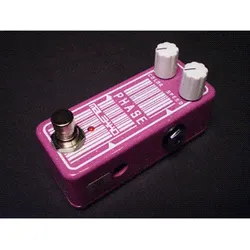
Malekko PHASEPHASE malekko omicron series analog phase shift pedal. Der Malekko Omricon Phaser ist ein kompakter und einfach einzusetzender 4-Stufen-Phaser, der ganz schön was abkann. Das Color Poti verändert subtil die Phasing-Frequenz. Ganz links lässt es mehr Bass durch, ganz rechts weniger. Der Regelweg des Speed-Potis geht von einem sich langsam entwickelnden Phasing bis hin zu einem superschnellen, vollkommen überdrehten Effekt. Noch mehr Flexibilität wird duch das im Innern des Gehäuses befindliche Trimpoti erreicht. Ganz links bezieht es auch tiefe Frequenzen ins Phasing ein, während es rechts mehr auf die Höhen wirkt. We are super happy to introduce PHASE", the Malekko Omicron Series analog phaser pedal. Small and simple to use, this all analog, true bypass 4 stage phaser packs quite a punch, and all in a super-small little package. The color pot subtly shifts the phasing frequency. All the way left, more bass passes through, and all the way right, less. The speed pot will take you from slow chugging evolving phasing to super fast tilt-o-wheel craziness! For even more flexibility, the internal trim pot is a coarse frequency range selector. Set all the way left will allow the lower frequencies to be phasing, all the way right allows more high end frequencies to pass. This combination of the internal trim pot and the color main pot work in conjunction so you can dial in your specific range perfectly! Runs off a 'standard' 9VDC neg tip regulated power supply (not included). "155,00 €*Versand: 0,00 €Sichere Weiterleitung zum Anbieter
-
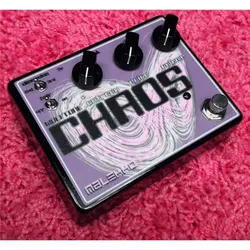
Malekko Wolftone CHAOSWolftone CHAOS analog shaping distortion pedal Sanctioned by Todd Wolfgram, Malekko is extremely happy to release our hand-built, all-analog Wolftone CHAOS pedal. A brief history of the Wolftone pedals: in the early 2000's, our friends Studio Electronics released two superb Todd Wolfgram designed effect pedals, the Wolftone HELIUM and Wolftone CHAOS. These pedals have since earned almost mythical status due to their intense distortions and unique sounds which were unlike anything else available as well as their rarity. Todd worked closely with Malekko to update the original CHAOS without modifying any sonic aspect of this celebrated pedal. Now running on a 'standard' 9v neg tip adapter, the CHAOS is an all analog distortion pedal with many extremes. The Dimension and Hair switches combined with pickup selection and playing dynamics allow sweeping filter and ring modulation effects coupled with majestic octave and higher-overtones for an incredible sonic palette. This is a pedal with a glorious reputation and for good reason! Stay tuned for Todd Wolfgram's pedal operation description! The pedal is powered by a 9v DC adapter (neg tip) or internal battery snap.205,00 €*Versand: 0,00 €Sichere Weiterleitung zum Anbieter
-
Malekko EKKO 616 MKIIMalekko EKKO 616 MKII 650ms analog delay pedal 650ms analog delay pedal Das Malekko EKKO 616 ist ein kompaktes, aber voll ausgestattetes Analog Delay mit einer Verzögerung von bis zu 650 ms. Die spezielle Abstimmung der Repeats des E616 gibt Raum für eine größere Bandbreite als bei den meisten traditionellen Analog Delays. Dreht man das Mix-Poti voll auf, werden die Repeats etwas lauter als das Originalsignal. Das ergibt, wenn benötigt, einiges mehr an Flexibilität. Die Repeats gehen von einem simplen Slapback über ein sanftes Ausklingen bis hin in die nächste Galaxis, wenn man es will. Betätigt man den Modulations-Knopf, bekommt das E616 einen völlig neuen Charakter, von subtilen Chorus über ein wunderschönes Vibrato bis dahin, wohin noch nie ein Mensch vorgestoßen ist. Das EKKO 616 lässt einem sogar noch die Wahl zwischen einem True Bypass und einem gebufferten Bypass, bei dem sich über ein internes Trimpoti die Lautstärke an den Rest des Setups anpassen lässt. Nachdem sie das gemeinsame Musizieren in einer Band ein Jahr überlebt hatten, kam den beiden Inhabern von Malekko die brilliante Idee, auch in der Geschäftswelt zusammenzuarbeiten. Der Umstand, dass sie zu diesem Zeitpunkt nicht im gleichen Bundesstaat lebten, ermöglichte eine unbelastete Produktentwicklung auf und um einen Küchentisch herum. Küchentische im Allgemeinen und der Erfolg des Barker Assmaster im Speziellen riefen aber bald nach einer neuen und angemessenen Werkstatt für das wachsende Geschäft. Mit der neuen Produktionsstätte hielt auch etwas mehr Seriösität Einzug bei Malekko Heavy Industries. Kein zerbrochenes Geschirr mehr, und auch der Parkplatz war nicht mehr übersät mit den Resten von Pedalen, die, nur als gerechte Strafe für ihre Insubordination, überfahren worden sind... Bald erschienen das Echo 800 und das Echo 300 auf der Bildfläche, die von vielen Musikern als zwei der besten Beispiele für alte/neue Analog-Technologie angesehen werden, und weitere Pedale sollten folgen. Das Malekko EKKO 616 MKII ist neu und stammt aus einer limitierten Sonderproduktion von MAlekko Ende 2019. For years, Malekko has been synonymous with the best quality BBD delays available. Today the evolution continues with the EKKO 616, a full featured yet compact delay with external modulation controls, an optional buffer, internal level pot and 650ms of pure analog bliss! The E616's specially voiced repeats allow a larger bandwidth to pass than most traditional analog delays. Turn the mix pot all the way up and the repeats will be slightly louder than the dry signal if needed, allowing greater flexibility. The regeneration pot will take you from a simple slapback to a nice gentle decay of a few repeats then all the way to taking off into outer space with just a turn of the pot! Engage the modulation button and the Malekko EKKO 616 takes on a whole new personality, from subtle chorusing or beautiful vibrato to way WAY beyond. The EKKO 616 also allows you to select your type of bypass between buffered or true bypass. Tired of annoying volume drops? An internal trimpot (labeled gain") will allow you to set the EKKO 616's level to your specific setup. At Malekko, we didn't set out to make a carbon copy of anything. Instead of looking backwards, we designed a new and visionary analog delay from the ground up. Operates on a 9V battery or optional 9VDC neg tip regulated power supply. If your 616 has a blue board inside, you have an EKKO 616 MKII. BYPASS CIRCUIT: The bypass circuit is only active when the effect is off. Choosing buffered will light the LED; true is LED off. If you have the buffered bypass circuit on and the LED goes out when you engage the effect, the pedal is working correctly. DELAY TIME FIDELITY: We calibrated the 616 MKII to allow for longer delay times than the original 616. In any analog delay, its longest time settings result in lower fidelity and may even generate odd sound artifacts. Positioning the TIME pot to roughly 3 o’clock will approximate the original 616’s longest delay time and its fidelity. "209,00 €*Versand: 0,00 €Sichere Weiterleitung zum Anbieter
-
Weber, Nicole: Lernstationen Musik: NotenLernstationen Musik: Noten , 2. bis 4. Klasse , Zündkabel & Zündkabelstecker > Elektrik & Zündungen , Auflage: 9. Auflage, Erscheinungsjahr: 20200101, Produktform: Kartoniert, Beilage: Broschüre klebegebunden, Titel der Reihe: Bergedorfer Unterrichtsideen##, Autoren: Weber, Nicole, Auflage: 21009, Auflage/Ausgabe: 9. Auflage, Seitenzahl/Blattzahl: 65, Themenüberschrift: EDUCATION / Teaching Methods & Materials / General, Keyword: 2. bis 4. Klasse; Grundschule; Instrumente/Noten; Musik, Fachschema: Didaktik~Unterricht / Didaktik~Musikunterricht / Lehrermaterial, Themenvorschläge, Bildungsmedien Fächer: Musik, Fachkategorie: Didaktische Kompetenz und Lehrmethoden~Unterricht und Didaktik: Musik, Bildungszweck: für den Primarbereich, Warengruppe: HC/Schulbücher/Unterrichtsmat./Lehrer, Fachkategorie: Unterrichtsmaterialien, Thema: Verstehen, Text Sprache: ger, UNSPSC: 49019900, Warenverzeichnis für die Außenhandelsstatistik: 49019900, Verlag: Persen Verlag i.d. AAP, Verlag: Persen Verlag i.d. AAP, Verlag: Persen Verlag, Länge: 297, Breite: 213, Höhe: 5, Gewicht: 225, Produktform: Kartoniert, Genre: Schule und Lernen, Genre: Schule und Lernen, Vorgänger: A6884050, Herkunftsland: DEUTSCHLAND (DE), Katalog: deutschsprachige Titel, Katalog: Gesamtkatalog, Katalog: Kennzeichnung von Titeln mit einer Relevanz > 30, Katalog: Lagerartikel, Book on Demand, ausgew. Medienartikel, Relevanz: 0010, Tendenz: -1, Unterkatalog: AK, Unterkatalog: Bücher, Unterkatalog: Hardcover, Unterkatalog: Lagerartikel, Unterkatalog: Schulbuch, WolkenId: 260385823,99 €*Versand: 0,00 €Sichere Weiterleitung zum Anbieter
-
Wie kann man verschiedene musikalische Elemente wie Melodie, Rhythmus und Harmonie kombinieren, um eine beeindruckende Komposition zu erstellen?
Man kann verschiedene musikalische Elemente kombinieren, indem man eine Melodie mit einem passenden Rhythmus und harmonischen Akkorden verbindet. Durch die richtige Balance und Abstimmung dieser Elemente entsteht eine harmonische und ansprechende Komposition. Es ist wichtig, kreativ zu sein und experimentierfreudig zu bleiben, um ein einzigartiges und beeindruckendes Musikstück zu schaffen. **
-
Wie kann man verschiedene musikalische Elemente wie Melodie, Harmonie und Rhythmus zusammenfügen, um eine ansprechende Komposition zu erstellen?
Indem man die Melodie, Harmonie und Rhythmus so kombiniert, dass sie sich gegenseitig ergänzen und verstärken. Durch die Verwendung von Kontrasten und Variationen, um Spannung und Interesse zu erzeugen. Indem man die musikalischen Elemente organisch miteinander verwebt, um eine kohärente und fesselnde Komposition zu schaffen. **
-
Was ist der Unterschied zwischen Rhythmus, Melodie und Harmonie?
Rhythmus bezieht sich auf die zeitliche Organisation von Klängen und betont die regelmäßige Abfolge von betonten und unbetonten Noten. Melodie bezieht sich auf die Abfolge von Tönen, die eine musikalische Linie bilden und eine bestimmte Tonhöhe haben. Harmonie bezieht sich auf die vertikale Anordnung von Tönen und beschreibt, wie sie zusammenklingen und welche Akkorde oder Harmonien gebildet werden. **
-
Wie kann man verschiedene musikalische Elemente wie Melodie, Harmonie und Rhythmus verwenden, um eine kohärente musikalische Komposition zu erstellen?
Man kann verschiedene musikalische Elemente wie Melodie, Harmonie und Rhythmus kombinieren, um eine kohärente musikalische Komposition zu erstellen, indem man sicherstellt, dass sie miteinander harmonieren und sich ergänzen. Die Melodie kann als Leitfaden dienen, während die Harmonie für Tiefe und Farbe sorgt und der Rhythmus den Gesamtklang strukturiert und zusammenhält. **
Ähnliche Suchbegriffe für Malekko-PHASE
-
Malekko Scrutator Bit + Sample Rate ReducerMalekko Heavy Industry Scrutator While much of the world strives for the most pristine audio quality imaginable, including terms such as bits and sample rate, many of us long for a device that is the opposite of that. We want a device that is pristine until we want it to be otherwise, and when the time calls, we want to mangle the sound within inches of its life. We want to crush those bits and flatten those sample rates. For this, we call on a “bit crusher,” an effect that’s largely existed in plug-in form for many years. And as of now, there’s no better unit in the business than the Malekko Scrutator. While most bit crusher-type effects feature three knobs—sample rate, bit depth and volume—the Scrutator features a much more robust control set, featuring Mix, Q and Filter. The Mix knob is key here, as players can subtly mix in just as much post-musical desolation as they wish, and the onboard adjustable Preamp keeps the signal cookin’. Of course, this nuclear winter wasteland isn’t the only setting inside the Scrutator—not by a long shot. DAW-equipped musicians have been using bit crushing plug-ins for years now, as they excel on fattening up any lead line when set subtly, or for adding a bit of digital crumble to multi-tracked guitars. The Filter knob can be set to either low pass or band pass; holding down the bypass switch and powering the Scrutator up changes between these two types. The sweep in the Filter knob is a heavy one as well, and this only adds to the effect, and it creates for quite a dynamic effect when used with an expression pedal. Yes, there’s a jack for an expression pedal. Prepare to be amazed. Any of the Sample, Bit, Filter and Q can be controlled simultaneously . What’s more, users can determine which way they want the knobs to sweep. That’s right: with some simple knob wrangling, players can set the Scrutator to INCREASE the Q and Filter and DECREASE the Bit and Sample knobs when the attached expression pedal is rocked forward. Best of all, these can be combined in any way. Set the Filter knob to open up and the Bit and Sample knobs to decrease, and turn the Scurator into a futuristic malfunctioning wah pedal. Try setting the Sample knob to decrease as the Bit knob increases; one end of the pedal has a hi-fi, yet aliased-to-shreds tone, while the other end of the pedal delivers a crystal clear destroyed tone. The choice is yours. Malekko Heavy Industry Scrutator Features: Highly-customizable expression control: players can choose sweep direction and up to four knobs at once Selectable low- and band-pass filter Mix knob allows players to add in subtle textures as well as full-on destruction Preamp provides crystal-clear signal—until you destroy it Standard 9v center-negative power operation259,00 €*Versand: 0,00 €Sichere Weiterleitung zum Anbieter
-
Malekko Sneak Attack Attack - Decay and TremoloDer Sneak Attack ist ein Auto-Swell-Lautstärkeregler, der auch manuell ausgelöst oder im Tremolo-Modus verwendet werden kann. Der Kern des Pedals ist ein Attack / Decay Hüllkurvengenerator mit separaten Längen- und Kurvensteuerungen. Die Hüllkurve kann auf verschiedene Weise mit dem Eingangssignal, eingebautem Fußschalter, Lil 'Buddy-Fußschalter oder externer Uhr / Klick-Spur ausgelöst oder getaktet werden. Auto Swell/Tremolo Effekt-Typ: sonstige Bauart: Analog Mono/Stereo: Mono In, Mono Out Regler: Curve A, Curve D, Level, Length A, Lenth D, LFO Auto Thresh Bypass Modus: True Bypass Stromversorgung: 9VDC, Center negative Stromverbrauch: 50mA Batteriebetrieb: Batteriebetrieb möglich Batterie-Typ: 9V Block Gehäuseformat: Standard Abmessungen BxHxT (cm): 6,35 x 5,7 x 14 B/H/T Gewicht: 0,292 Kg Trigger Input für optionalen Fußtaster oder external Clock Tap Tempo Since the first luthier installed the first volume knob on an electric guitar, players have been trying to figure out ways to modulate volume. First, there was the volume knob, then came “vibrato,” known today as tremolo, and then volume pedals. These allowed players to manipulate the volume in any way they wanted, so long as they kept their foot on the pedal. Then came auto-swell pedals, which were cool but extremely limited. For a long time, this was the apex of swells. Now that Malekko has released the Sneak Attack, those days are behind us. The Sneak Attack will be the last swell pedal you’ll ever buy. It will replace any and all “swell” pedals and volume pedals, and it will leave your tremolo boxes in the dust. Four knobs offer full control of both sides of a waveform, which can be applied automatically, as a swell, or manually. The left side acts as the Attack waveform, and the right side is the Decay. You can select the shape of the attack and decay—25 different combinations—then the rise and fall time of each. There’s also a mode-dependent Level knob. Three core modes make up the Sneak Attack, and they are: Sensitivity settings 1–4: This control offers sensitivity settings for the swell effect. This allows you to tailor the attack and decay to your picking strength or pickup type. In these settings, the swell effect is always active, and the Level knob is a volume control. LFO mode: This mode turns the Sneak Attack into a robust tremolo. The Attack and Decay waves modulate cyclically, and by tweaking the waveshapes, players can cop classic sine wave trem, lopsided bias trem, Vox Repeat Percussion-style reverse-sawtooth trem and more. Using the Length knob allows players to skew the waveforms, acting as a speed control and a wave fine-tuning control all in one. In this mode, Level controls a wet-dry mix. Malekko’s Lil Buddy switch (sold separately) can be used as a subdivision switch in this mode, allowing for hands-free subdivision adjustment. Manual Trigger: This mode eliminates the decay side from the circuit, and the Attack is triggered by tapping the footswitch once. By adding such a tactile control, players can use the Sneak Attack to spice up a solo by using the swell sparingly or dramatic, huge-sounding swells in ambient passages. In this mode, the Lil Buddy acts as a remote trigger. Please note that the Little Buddy must be used with a TRS cable to function correctly. The Sneak Attack stacks extremely well with other effects, offering seamless integration into any effects setup. By running the Sneak Attack first in the chain, players can fade in swells covered in post-effects for some extremely evocative guitar lines. Malekko Sneak Attack Features: Attack and Decay waveforms are fully adjustable with 25 combinations and time for each LFO mode turns the Sneak Attack into a full-featured tremolo Manual Trigger mode for one-shot swells Made in Oregon, USA Standard 9v center-negative power operation (adapter not included)295,00 €*Versand: 0,00 €Sichere Weiterleitung zum Anbieter
-
Mathematik der Musik: Harmonie, Rhythmus und Melodie in Zahlen, Taschenbuch von Mina Kumari, Verlag Unser Wissen, 978-620-7-59578-5Mathematik Der Musik: Harmonie, Rhythmus Und Melodie In Zahlen, Taschenbuch Von Mina Kumari, Verlag Unser Wissen, 978-620-7-59578-5, Seitenanzahl: 7243,90 €*Versand: 0,00 €Sichere Weiterleitung zum Anbieter
-
Wie können verschiedene musikalische Elemente wie Melodie, Rhythmus und Harmonie effektiv kombiniert werden, um eine mitreißende Komposition zu erschaffen?
Durch das Zusammenspiel von Melodie, Rhythmus und Harmonie kann eine Komposition eine emotionale Tiefe und Dynamik erhalten. Die richtige Balance und Abstimmung dieser Elemente ist entscheidend, um eine mitreißende Wirkung zu erzielen. Kreativität, Experimentierfreude und ein gutes Gespür für musikalische Strukturen sind dabei essentiell. **
-
Wie kann man verschiedene musikalische Elemente wie Melodie, Harmonie und Rhythmus kombinieren, um eine einzigartige musikalische Komposition zu erschaffen?
Indem man verschiedene Melodien, Harmonien und Rhythmen miteinander verwebt, um eine interessante Klanglandschaft zu schaffen. Durch Experimentieren mit verschiedenen Tonhöhen, Akkorden und Schlagzeugmustern kann man eine einzigartige musikalische Komposition entwickeln. Wichtig ist es, die verschiedenen Elemente so zu arrangieren, dass sie zusammenpassen und eine harmonische Gesamtkomposition ergeben. **
-
Wie können verschiedene musikalische Elemente wie Melodie, Harmonie und Rhythmus miteinander kombiniert werden, um eine ansprechende musikalische Komposition zu erstellen?
Durch das Zusammenspiel von Melodie, Harmonie und Rhythmus können verschiedene musikalische Elemente miteinander kombiniert werden, um eine ansprechende Komposition zu erstellen. Die Melodie kann durch die harmonische Begleitung und den rhythmischen Groove unterstützt werden, um eine zusammenhängende und interessante Musikstück zu schaffen. Die richtige Balance und Kombination dieser Elemente ist entscheidend für die Qualität und Wirkung der Komposition. **
-
Wie können verschiedene musikalische Elemente wie Melodie, Harmonie und Rhythmus effektiv miteinander kombiniert werden, um eine gelungene Komposition zu erschaffen?
Durch sorgfältige Auswahl und Abstimmung der einzelnen Elemente können Melodie, Harmonie und Rhythmus harmonisch miteinander verschmelzen. Die Verwendung von Kontrasten und Variationen in den Elementen kann Spannung und Interesse erzeugen. Eine klare Struktur und ein roter Faden helfen dabei, die verschiedenen Elemente zu einem stimmigen Gesamtbild zusammenzufügen. **
* Alle Preise verstehen sich inklusive der gesetzlichen Mehrwertsteuer und ggf. zuzüglich Versandkosten. Die Angebotsinformationen basieren auf den Angaben des jeweiligen Shops und werden über automatisierte Prozesse aktualisiert. Eine Aktualisierung in Echtzeit findet nicht statt, so dass es im Einzelfall zu Abweichungen kommen kann. ** Hinweis: Teile dieses Inhalts wurden von KI erstellt.